Lush Oasis: 10 Shade-Loving Plants to Try in Your Garden

The Beauty of Shade Gardens

Shade gardens can be just as beautiful and vibrant as a prairie meadow basking in full sun. With the right plants in the right place, you can create a lush oasis in the driest, darkest corner of your space.

Shade gardens offer a calming, tranquil retreat, perfect for relaxing on hot summer days. They’re also a great solution for those tricky spots in your garden that get little direct sunlight.

Here are 10 shade plants to try out in your garden.

1. Hostas

Hostas are a classic choice for shade gardens. Their large, textured leaves come in a variety of colours and patterns, adding visual interest. I often underplant bare-stem shrubs with hostas and ferns for their lush foliage and texture. Be sure to plant other perennials along side them, since an entire border of hostas can look bare before they sprout in the spring, or once the slugs have devoured them, which happened to me this year. Buyer beware!

2. Ferns

Ferns thrive in shady, moist environments and bring a delicate, airy feel to the garden. From the classic Boston fern to the unique Japanese painted fern, there’s a variety for every taste. My shady fern corner is a favorite spot for reading and relaxing.

3. Astilbes

Astilbes produce feathery plumes of flowers in shades of pink, red, and white. They prefer moist, well-drained soil and add a pop of color to the shade garden. My astilbe bed lights up the shady side of my house with its vibrant blooms.

4. Heucheras
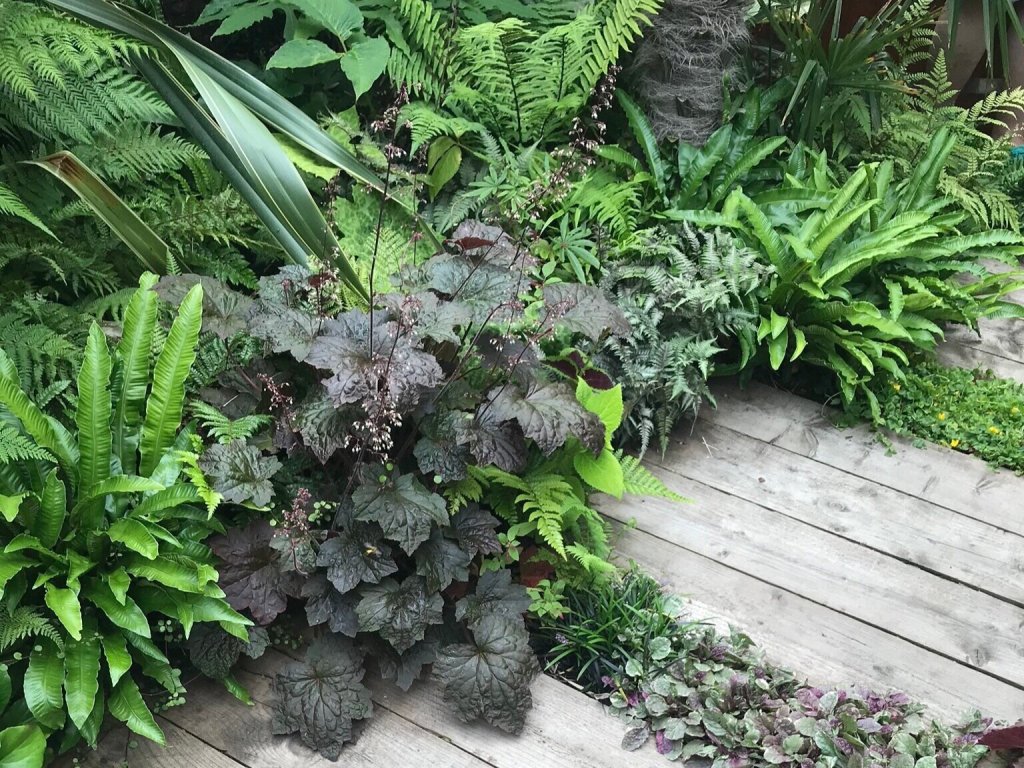
Also known as coral bells, heucheras offer stunning foliage in colours ranging from deep purple to lime green. They’re perfect for adding colour and texture to the shade garden. I’ve mixed different varieties of Heucheras and their close relative ‘Heucherella’ to create a colourful foliage display.

5. Bleeding Hearts
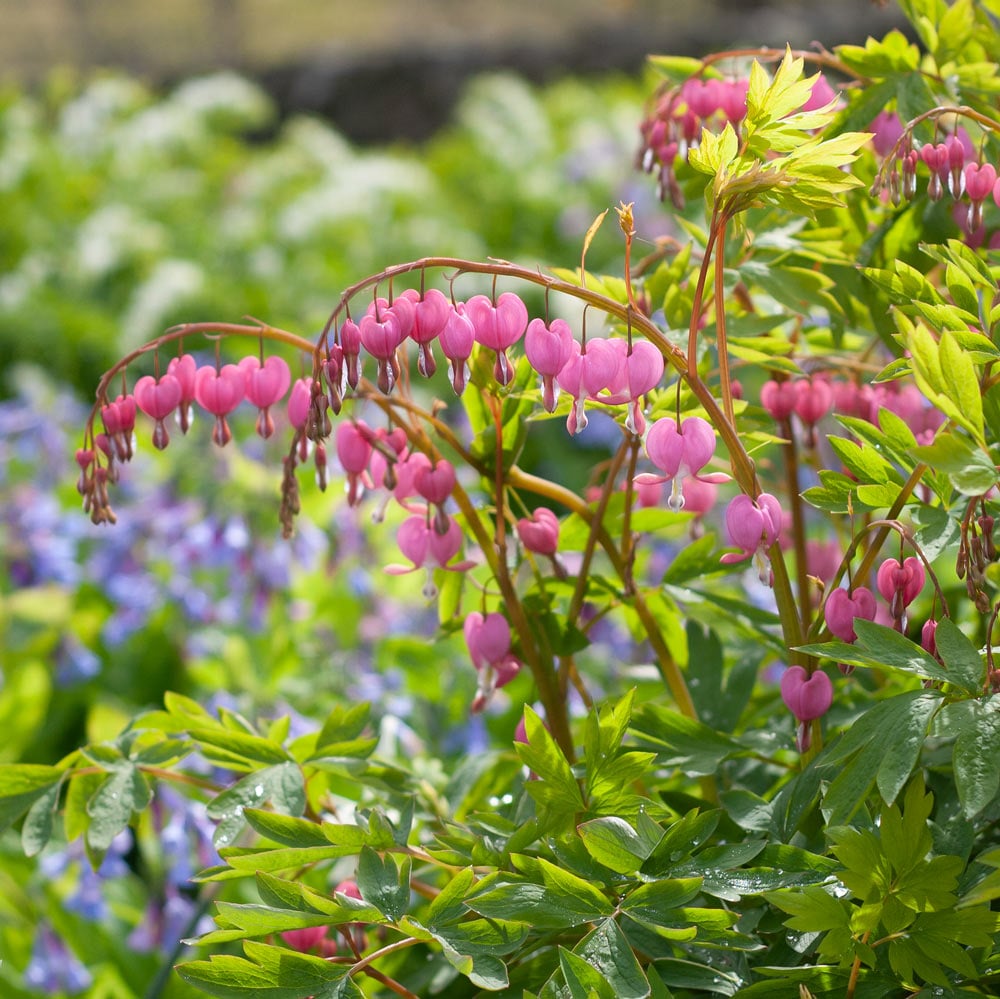
Dicentra Bleeding hearts are known for their heart-shaped, drooping flowers in shades of pink and white. They bloom in spring and early summer, adding charm and romance to the shade garden. My bleeding hearts are a sentimental favourite, reminding me of my grandmother’s garden.

6. Hellebores
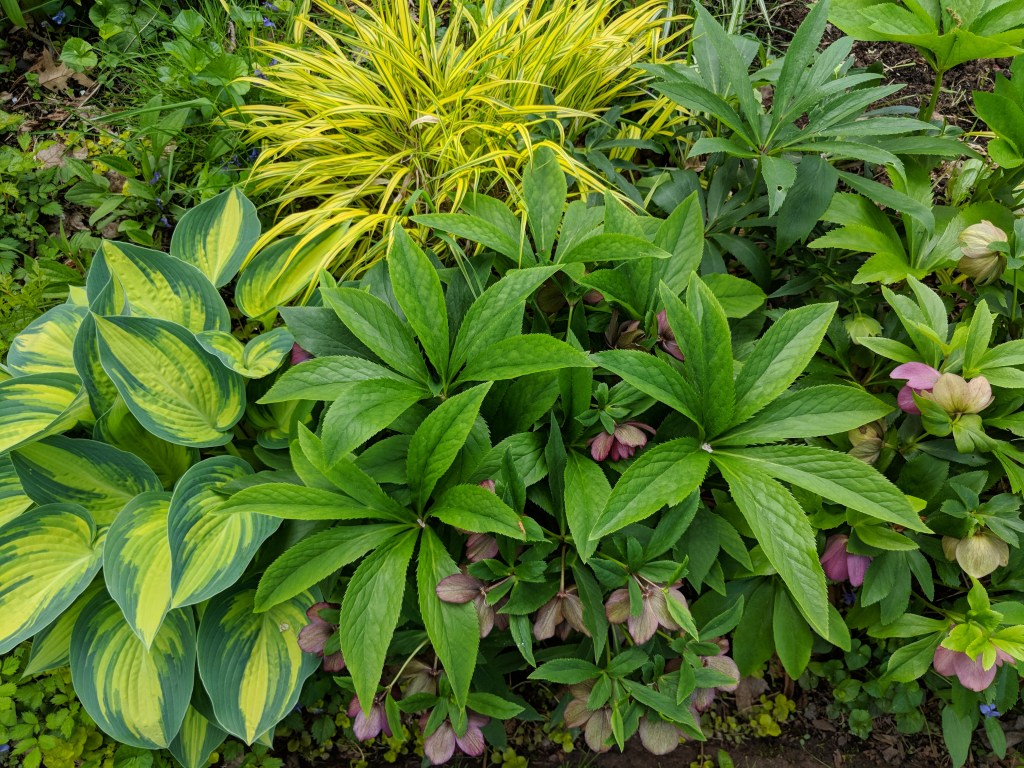
Hellebores, or Lenten roses, bloom in late winter to early spring, providing early-season interest. Their nodding flowers come in a range of colors, from white to deep purple. My hellebore patch is a beacon of hope during the last cold days of winter.

7. Japanese Forest Grass

Hakonechloa or Japanese forest grass, or , offers graceful, arching foliage in shades of green and gold. It’s perfect for adding texture and movement to the shade garden. I have a border of Japanese forest grass that sways gently in the breeze, creating a soothing effect.

8. Thalictrum
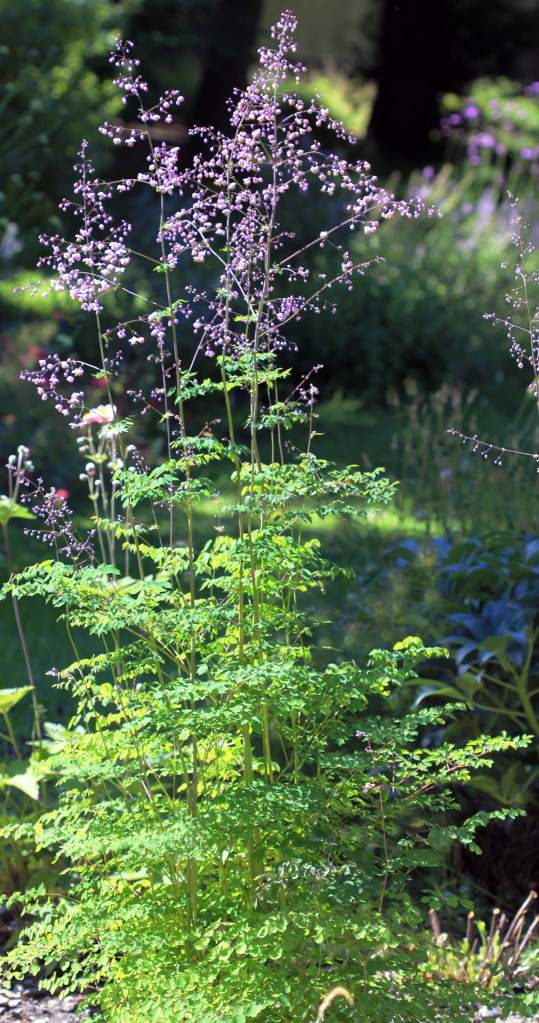
Chinese meadow-rue has dainty, aquilegia-like leaves and bears large clusters of small flowers in shades of white, yellow, pink and purple. . They’re a unique addition to the shade garden, providing texture, height and movement at the back of the border. My towering thalictrums are a great conversation starter.

9. Brunnera
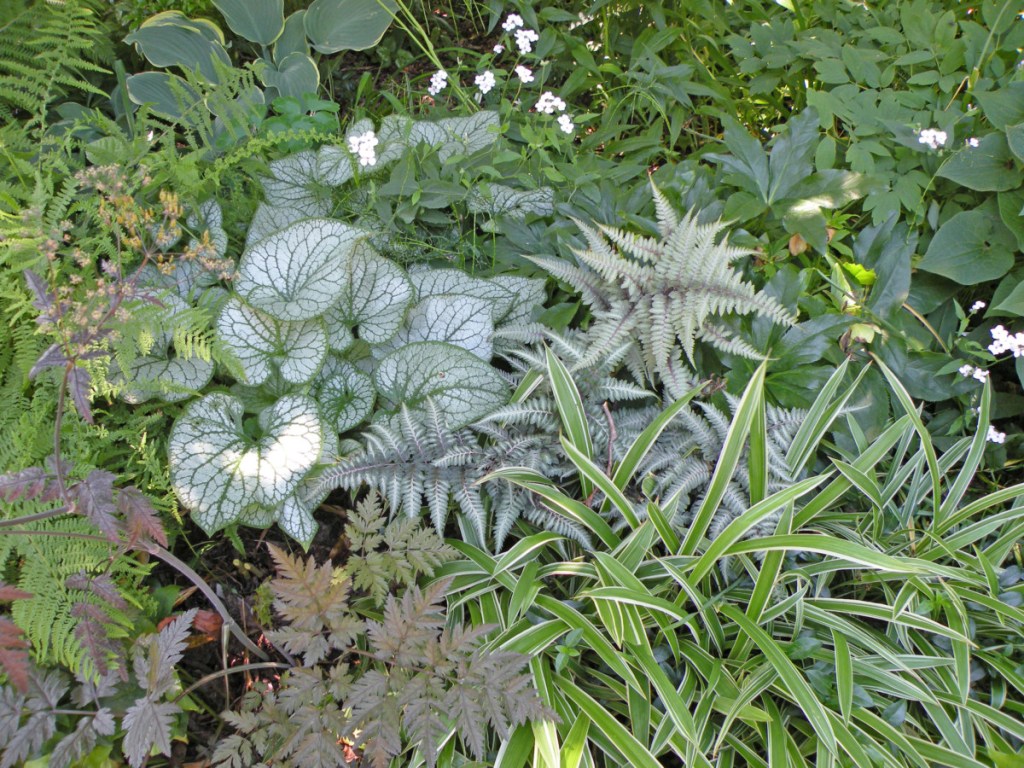
Textural contrast; variegated foliage, shade perennial combo: Athyrium filix-femina ‘Rotstiel’, Brunnera ‘Jack Frost’, Hesperis matrionalis, Hosta, Anthriscus sylvestris ‘Ravenswing’, Athyrium niponicum ‘Pictum’, Carex siderosticha ‘Variegata’; 18405 Magnolia bed ; 6/24/09

Brunnera, or Siberian bugloss, features heart-shaped leaves and delicate blue flowers in spring. It’s a great ground cover for shady areas. My brunnera bed looks like a sea of tiny blue stars in the spring, adding a magical touch to the garden.

10. Lungwort

Lungwort is a shade-loving perennial with spotted leaves and clusters of blue, pink, or white flowers in spring. It’s a reliable and attractive ground cover. I’ve planted lungwort around the base of my trees, where it thrives in the dappled shade.

Conclusion

Shade gardens can be just as lush and colourful as sunny ones with the right plant choices. These 10 plants will help you create a beautiful, tranquil oasis in that problem shady corner. Embrace the upside of shade and enjoy a lush, vibrant oasis in your own garden.

11 Epic Vertical Garden Ideas

Living in a small space doesn’t mean you can’t have a lush, vibrant garden.
Vertical gardening is a fantastic way to maximize space and add greenery and calm to any area.

Here are eleven epic vertical garden ideas to help you unlock your vertical space.

The Benefits of Vertical Gardening

Vertical gardening is perfect for small spaces, urban environments, or anyone looking to add an extra layer of beauty to their garden. It helps maximize space, improve air quality, and create a stunning visual effect.

1. Living Walls

Living walls, also known as green walls, are a striking way to add greenery to your space. They can be created using modular panels or fabric pockets filled with plants. I installed a living wall on my patio, transforming the space into a lush oasis of calm.

2. Hanging Planters

Hanging plants are a simple and effective way to add vertical interest.
Use macramé hangers, wall-mounted hooks, or even re-purpose old items like colanders. Why not hang a series of colourful pots from a balcony railing, to create a stunning cascade effect.

3. Pallet Gardens

Upcycle old pallets into vertical planters. Simply fill the gaps with soil and plant herbs, flowers, or succulents. Pressed for space? Why not try building a pallet garden with herbs outside your kitchen door, making it easy to grab fresh leaves while cooking.

4. Trellises, Pergolas & Arbours

Grow climbing plants like jasmine, roses, or runner beans on trellises, pergolas and arbours. These structures not only support the plants but also add height and structure to your garden. My own pergola is covered in wisteria which looks and smells divine in summer…

5. Pocket Edibles

Pocket gardens use fabric or felt pockets attached to a wall or frame. They’re perfect for small plants like herbs, lettuce, or strawberries. Try installing a pocket garden on your kitchen wall to create a green, edible living, artwork!

6. Vertical Planter Boxes

Stack planter boxes vertically to create a tiered effect. These can be built or bought and are ideal for growing a variety of plants. My vertical planter boxes are filled with a mix of flowers and vegetables, providing both beauty and bounty.

7. Gutter Gardens

Repurpose old gutters into horizontal planters and mount them on a wall or fence. They’re perfect for shallow-rooted plants like herbs and strawberries. If you have a bare wall with good light on a garden shed, why not knock one up; it’s a great use of space!

8. Wall-Mounted Shelves

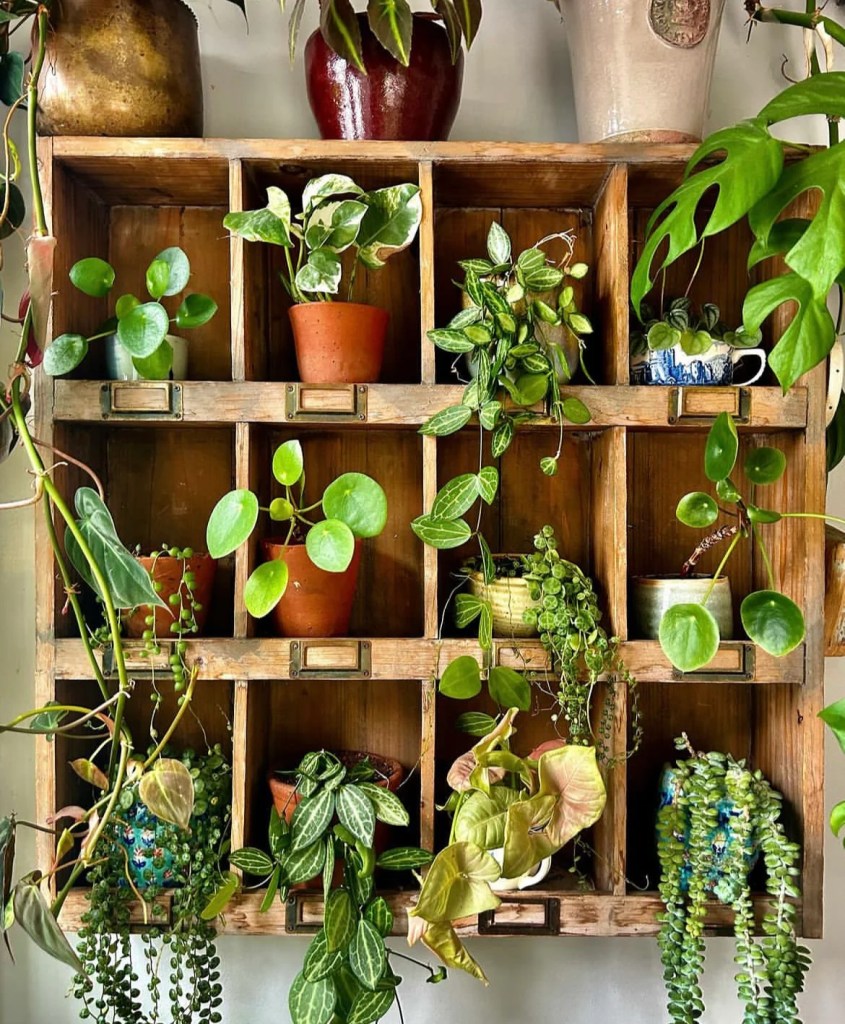
Install shelves on a wall and fill them with pots of your favourite plants. This is a versatile and stylish way to display your garden. I once had a series of rustic wooden shelves on my balcony, filled with an assortment of succulents and herbs.

9. Vertical Herb Gardens

Create a vertical herb garden by using a ladder shelf, hanging planters, or pocket planters. It’s a practical and beautiful way to grow your culinary herbs. My vertical herb garden right outside the kitchen is a daily delight for fresh cooking ingredients.

10. DIY Vertical Planters

Get creative with DIY vertical planters. Use old picture frames, wooden crates, or PVC pipes to create unique plant displays. Make a vertical planter out of a wooden crate and some old jars to create a unique focal point in your garden.

11. Succulent Frames

Create stunning succulent frames by planting succulents in shallow boxes or picture frames filled with soil. They’re low-maintenance and add a modern touch to any space. My succulent frame is a conversation starter at every garden party.

Conclusion

Vertical gardening offers endless possibilities for adding greenery to any space. Whether you’re working with a small balcony, a bare fence or wall, or a postage stamp patio, these ideas could help you create an eye-catching vertical garden. Embrace the vertical space and enjoy the beauty and benefits of a lush, green garden, no matter the size.

11 Great Sustainable Garden Tips

Gardening is more than just a hobby; it’s a way to positively contribute to your local environment.

Sustainable garden design moves toward creating an eco-friendly space that supports local ecosystems while reducing waste.

Let’s dive into some genius sustainable garden design tips that will transform your yard into a green oasis.

The Importance of Sustainability

In today’s world, sustainability isn’t just a buzzword; it’s a necessity.
A sustainable garden uses resources wisely, minimizes waste, and promotes biodiversity. It’s about creating a beautiful space that also benefits the environment. Many more ideas can be found in Marian Boswall’s Sustainable Garden (buy here), but here are 11 tips to help you get started:

1. Choosing Native Plants

One of the best ways to create a sustainable garden is to use native plants.
They are adapted to the local climate and soil, requiring less water and maintenance. Plus, they provide essential habitats for local wildlife.

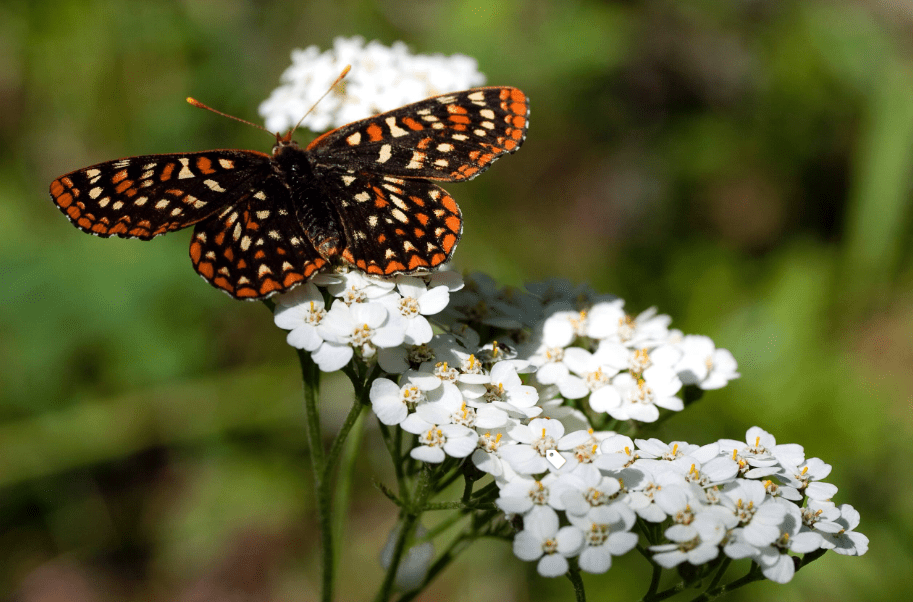
For instance, in my own garden, I replaced an ailing Cordyline australis with native Yarrow (Achillea millefolium) wildflowers, and it was amazing to see the increase in butterflies and bees visiting that part of the garden in a short space of time.

2. Composting

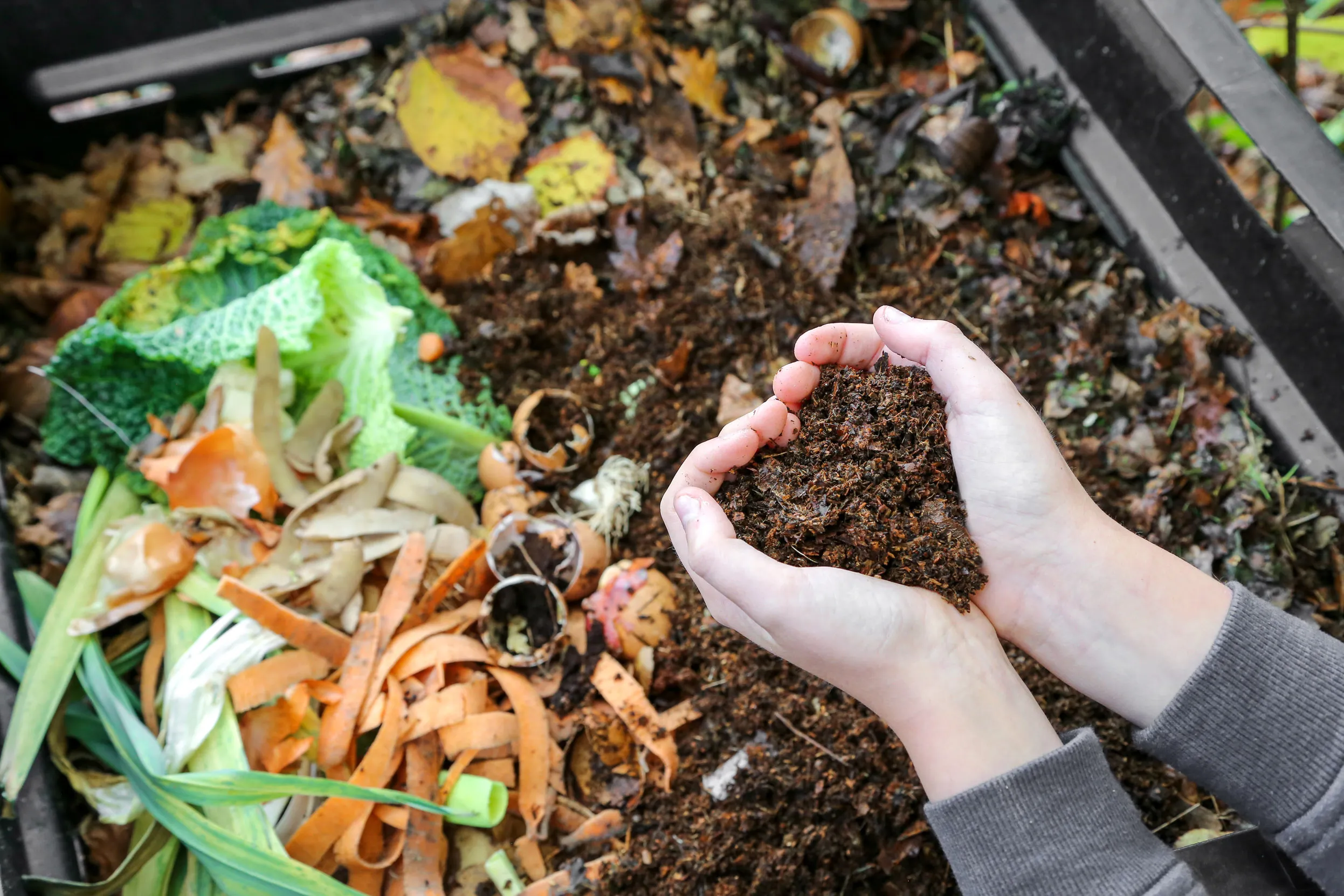
Instead of sending kitchen scraps and yard waste to the landfill, compost them! Composting not only reduces waste but also provides rich nutrients for your plants. I set up a simple compost bin in a hidden corner of my garden, and it’s been a game-changer for my soil quality.

3. Water Conservation

Efficient water use is crucial for sustainability. Install a water butt to collect rainwater for irrigation. Drip irrigation systems also help minimise water usage by delivering water directly to the plant roots.

4. Recycling in the Garden

Think about how you can reuse materials in your garden. Old wooden pallets can be transformed into vertical planters, and broken pots can be used as drainage at the bottom of new pots. Why not turn an old ladder into a charming plant stand, adding height and character to your garden.

5. Organic, Peat-free Gardening

Avoid synthetic pesticides and fertilizers, which can harm the environment.

Choose organic alternatives such as homemade leafmold or peat-free compost instead.

Why not try out natural pest deterrents such as nematodes and ladybirds to keep your veg patch chemical free and low on pests.

Ladybirds are a super-effective means of controlling aphids, so leave messy areas in the garden at the end of summer for these friendly insects to find hiding places to overwinter.

6. Energy-Efficient Lighting

Lighting your garden doesn’t have to mean a higher electric bill. Solar lights are a fantastic option, providing soft lighting without energy costs. How about lining a garden path with solar lanterns, to create a magical glow at night.

7. Wildlife-Friendly Features

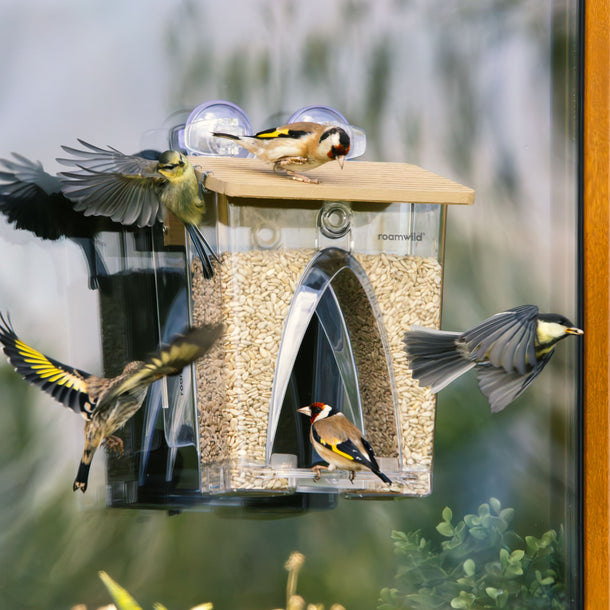
Add features like birdhouses, bat boxes, and insect hotels to attract beneficial wildlife. These creatures help with pest control and pollination.

My kids love watching the birds visit the feeders we’ve set up, and it’s a great way to teach them about nature.

8. Sustainable Garden Tools

Choose tools made from sustainable materials, like bamboo or recycled plastic. Additionally, maintaining your tools properly will extend their life, reducing the need for replacements. I have a sturdy, recycled plastic watering can that’s lasted years and still looks great.

9. Mulching

Mulching helps retain soil moisture, suppress weeds, and add nutrients to the soil as it decomposes. Use organic mulch like wood chips, straw, or leaves. I’ve found that using leaves from my yard as mulch not only recycles them but also provides excellent soil benefits.

10. Perennial Plants

Perennials are a great sustainable choice because they come back year after year, reducing the need for replanting. They’re also often hardier and less resource-intensive. My perennial herb garden not only saves me money each year but also provides fresh herbs for cooking.

11. Go No Dig

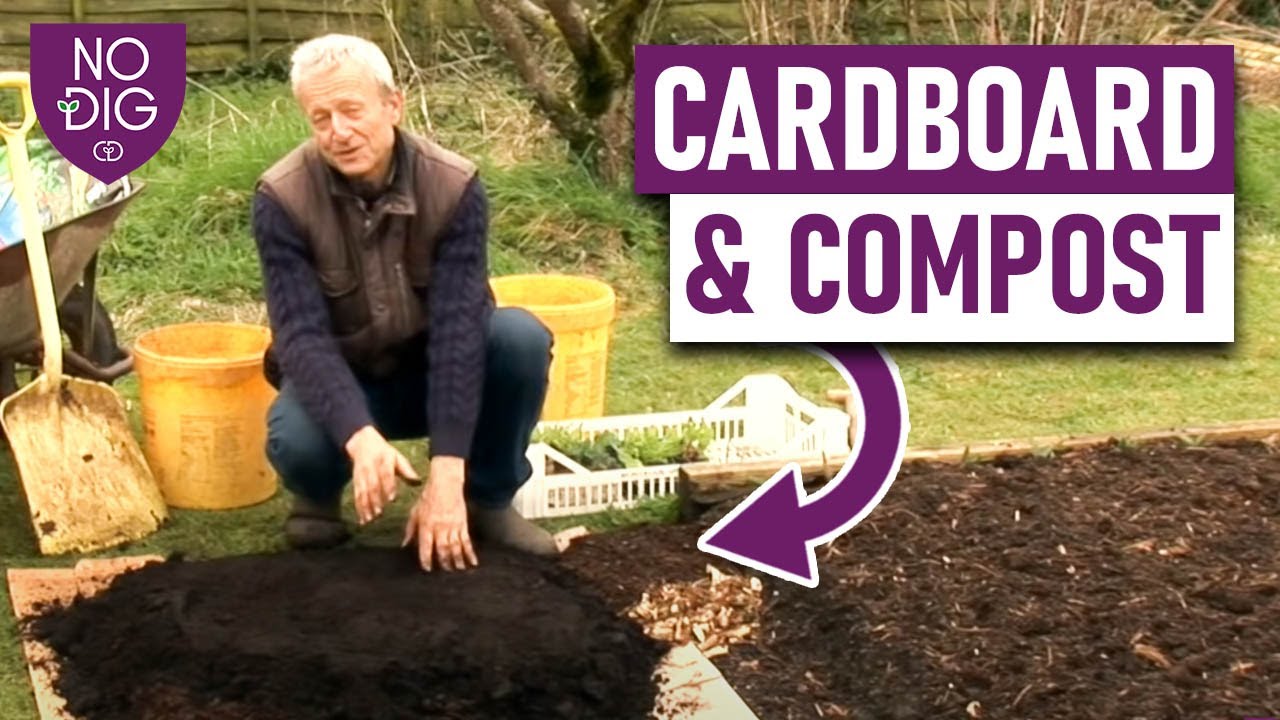
Reduce weedkillers using Charles Dowding’s No Dig method of starting a garden!

Rather than digging over soil each season, try covering last year’s garden with a thick layer of garden compost and mulch. Turning over the soil brings weed-producing seeds deep in the ground to the surface and allows them to begin germinating. By using the ‘No-Dig’ method, you can cut back on natural weeds in half the time.

Conclusion

Creating a sustainable garden is about making mindful choices that benefit both your outdoor space and the environment.

By incorporating some of these tips, you can enjoy a beautiful, eco-friendly garden that thrives with less effort and more impact.

Every small step counts in making our planet greener, so get creative with it and have fun.

Is this The Best Garden Design in Warwickshire and The Cotswolds of 2024?

Have your say on the voting buttons below…

Who is The Best Garden Designer in the West Midlands?

Have your say on who is the best garden designer in Warwickshire…

The best garden design in Warwickshire? You be the judge.
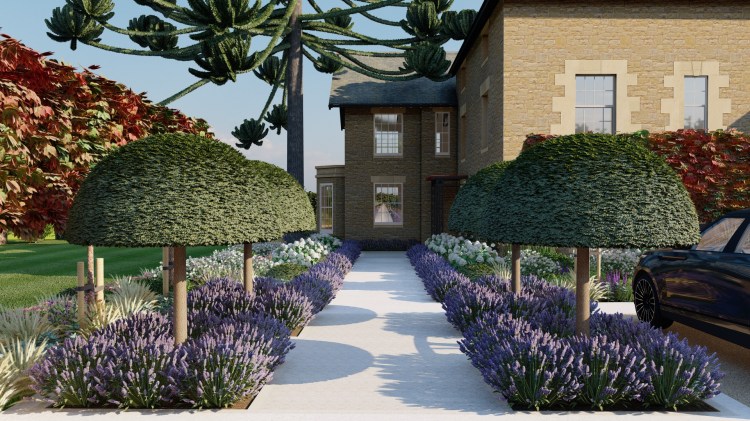
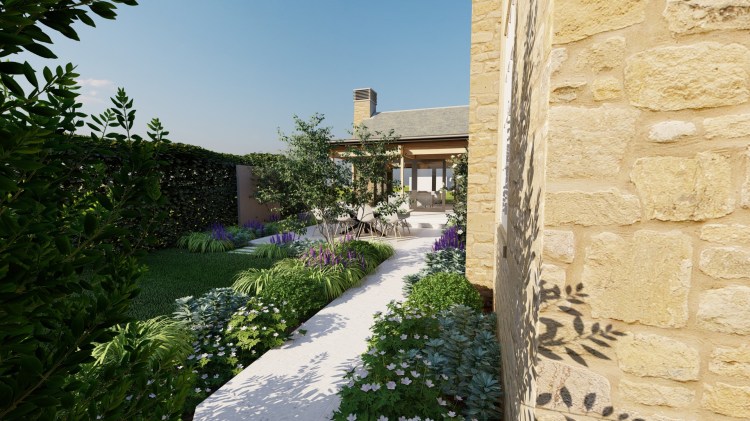
This beautiful stone villa has strong architectural bones and stunning surroundings.
The light touch of a leading designer with luxurious materials was all that was required.
Before & After Concept
Good Garden Design reflects the spirit of the surroundings. Here we repeat the calming rhythm of Geranium album with the soothing sound of Hakonechloa macra rustling in the wind.
The Best Garden Designers in Warwickshire are all raving about Salvia nemorosa ‘Caradonna’ and Euphorbia myrsinites
The best garden design practice in Warwickshire recommends repeating plants in drifts to give naturalism to planting