
The Beauty of Shade Gardens
Shade gardens can be just as beautiful and vibrant as a prairie meadow basking in full sun. With the right plants in the right place, you can create a lush oasis in the driest, darkest corner of your space.
Shade gardens offer a calming, tranquil retreat, perfect for relaxing on hot summer days. They’re also a great solution for those tricky spots in your garden that get little direct sunlight.
Here are 10 shade plants to try out in your garden.
1. Hostas

Hostas are a classic choice for shade gardens. Their large, textured leaves come in a variety of colours and patterns, adding visual interest. I often underplant bare-stem shrubs with hostas and ferns for their lush foliage and texture. Be sure to plant other perennials along side them, since an entire border of hostas can look bare before they sprout in the spring, or once the slugs have devoured them, which happened to me this year. Buyer beware!
2. Ferns

Ferns thrive in shady, moist environments and bring a delicate, airy feel to the garden. From the classic Boston fern to the unique Japanese painted fern, there’s a variety for every taste. My shady fern corner is a favorite spot for reading and relaxing.
3. Astilbes

Astilbes produce feathery plumes of flowers in shades of pink, red, and white. They prefer moist, well-drained soil and add a pop of color to the shade garden. My astilbe bed lights up the shady side of my house with its vibrant blooms.
4. Heucheras
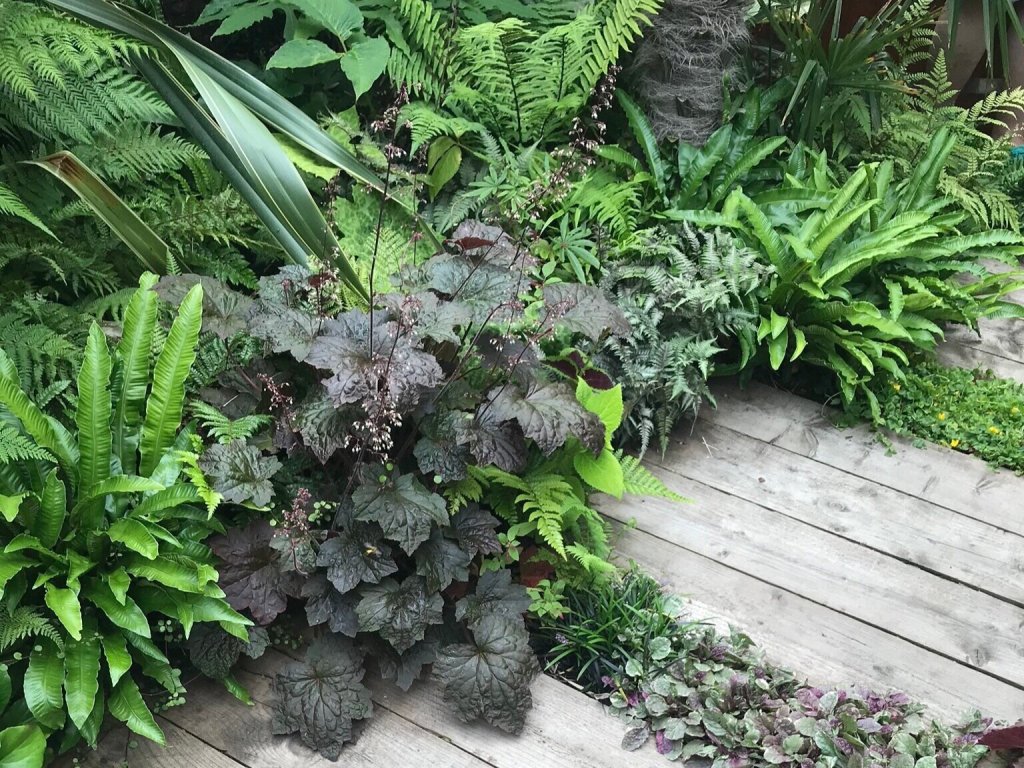
Also known as coral bells, heucheras offer stunning foliage in colours ranging from deep purple to lime green. They’re perfect for adding colour and texture to the shade garden. I’ve mixed different varieties of Heucheras and their close relative ‘Heucherella’ to create a colourful foliage display.
5. Bleeding Hearts
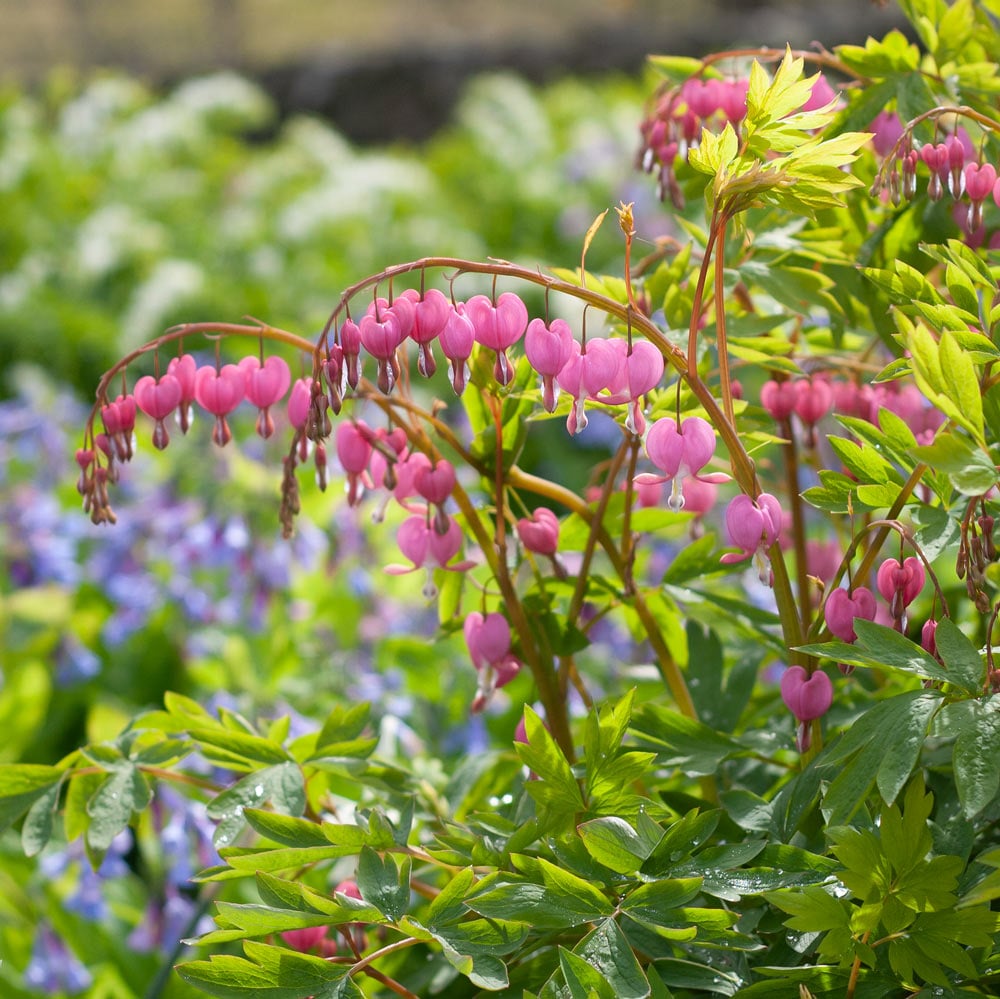
Dicentra Bleeding hearts are known for their heart-shaped, drooping flowers in shades of pink and white. They bloom in spring and early summer, adding charm and romance to the shade garden. My bleeding hearts are a sentimental favourite, reminding me of my grandmother’s garden.
6. Hellebores
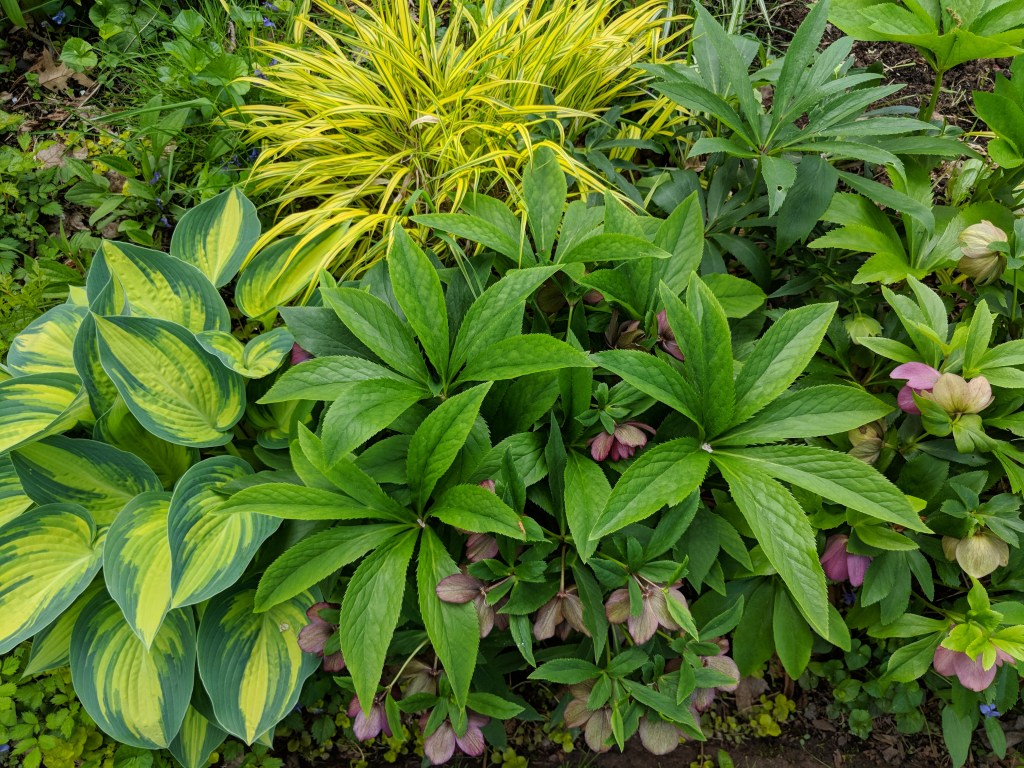
Hellebores, or Lenten roses, bloom in late winter to early spring, providing early-season interest. Their nodding flowers come in a range of colors, from white to deep purple. My hellebore patch is a beacon of hope during the last cold days of winter.
7. Japanese Forest Grass

Hakonechloa or Japanese forest grass, or , offers graceful, arching foliage in shades of green and gold. It’s perfect for adding texture and movement to the shade garden. I have a border of Japanese forest grass that sways gently in the breeze, creating a soothing effect.
8. Thalictrum
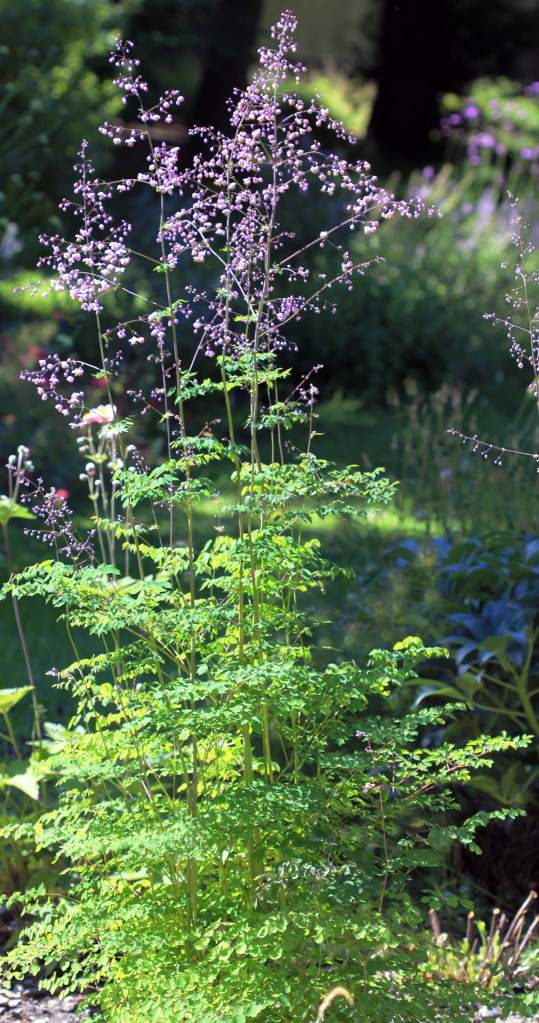
Chinese meadow-rue has dainty, aquilegia-like leaves and bears large clusters of small flowers in shades of white, yellow, pink and purple. . They’re a unique addition to the shade garden, providing texture, height and movement at the back of the border. My towering thalictrums are a great conversation starter.
9. Brunnera
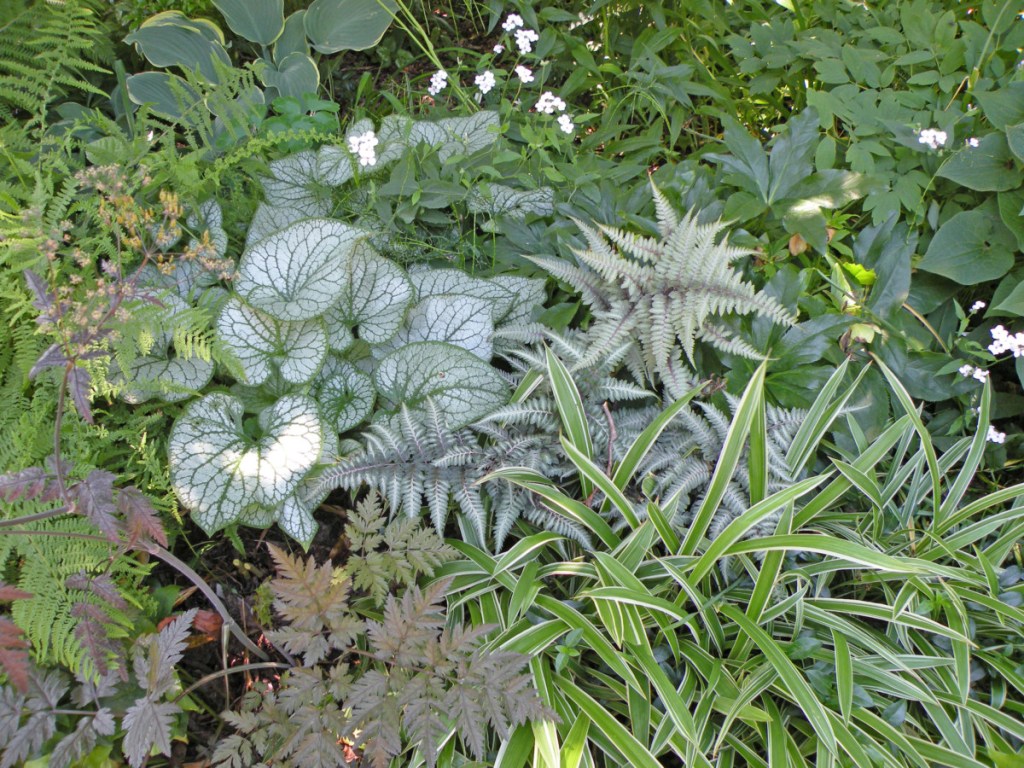
Brunnera, or Siberian bugloss, features heart-shaped leaves and delicate blue flowers in spring. It’s a great ground cover for shady areas. My brunnera bed looks like a sea of tiny blue stars in the spring, adding a magical touch to the garden.
10. Lungwort

Lungwort is a shade-loving perennial with spotted leaves and clusters of blue, pink, or white flowers in spring. It’s a reliable and attractive ground cover. I’ve planted lungwort around the base of my trees, where it thrives in the dappled shade.
Conclusion
Shade gardens can be just as lush and colourful as sunny ones with the right plant choices. These 10 plants will help you create a beautiful, tranquil oasis in that problem shady corner. Embrace the upside of shade and enjoy a lush, vibrant oasis in your own garden.
 Joel Davey Garden Design | The Place for High Quality Garden Design in Warwickshire